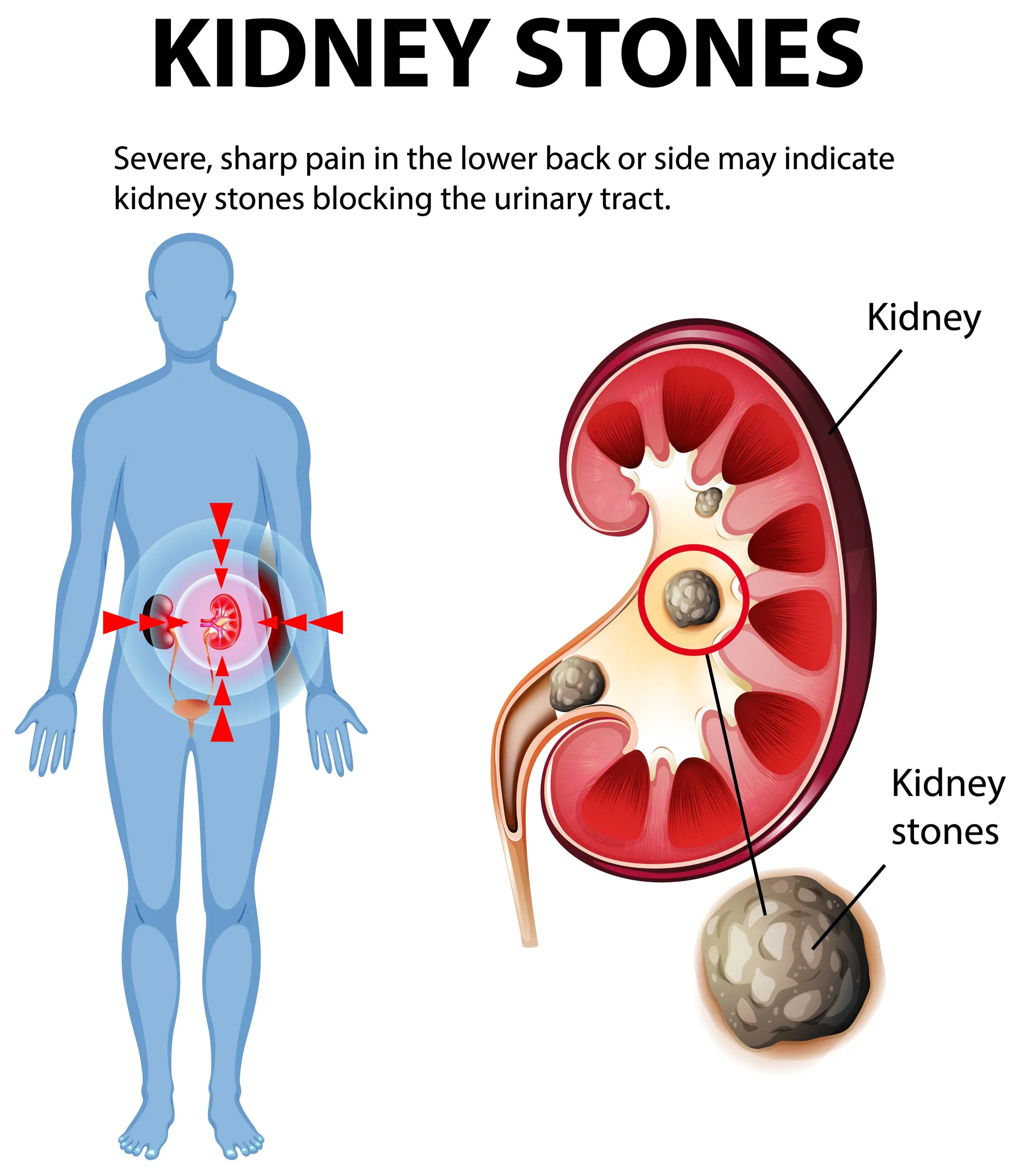
Not every kidney stone requires surgery. Small stones may pass naturally, while others need medical or surgical treatment because of their size, position or effect on the urinary system. The decision depends on imaging findings, symptoms, infection risk, kidney function and the likelihood of spontaneous passage.
Dr Mahtab at Jaipur AndroUrology Center evaluates kidney stone cases among patients from Pratap Nagar and nearby parts of Jaipur, Rajasthan. The assessment helps determine whether observation, medication or a stone-removal procedure is the more appropriate approach.
When Can a Kidney Stone Be Monitored?
A small stone may be managed without surgery when pain can be controlled, urine is passing normally and there are no signs of infection or significant kidney obstruction. The doctor may recommend fluids, pain relief, supportive medication and follow-up imaging.
Observation does not mean ignoring the stone. Monitoring is important because symptoms may improve even when the stone remains lodged in the urinary tract.
Signs That Surgery May Be Necessary
Kidney stone surgery may be considered when:
- The stone is unlikely to pass naturally
- Pain remains severe despite appropriate medication
- Urine flow from the kidney is blocked
- Kidney function is being affected
- Fever or infection occurs with obstruction
- Vomiting prevents adequate fluid intake
- The stone is increasing in size
- Repeated stone episodes disrupt daily life
- A stone remains in the ureter for an extended period
- There is only one functioning kidney and obstruction is present
Fever, chills, severe pain and reduced urine output can indicate an urgent problem, particularly when an infected urinary system is obstructed.
Comparing Common Kidney Stone Procedures
Ureteroscopy and Laser Stone Treatment
A thin instrument is passed through the natural urinary passage into the ureter or kidney. The stone may be removed directly or broken into smaller pieces with laser energy. There is no external surgical cut, although a temporary ureteric stent may be needed.
RIRS
Retrograde intrarenal surgery uses a flexible scope to reach stones inside the kidney through the urinary tract. Laser energy is commonly used to fragment the stone. RIRS may be considered for suitable kidney stones based on their size, position and anatomy.
PCNL
Percutaneous nephrolithotomy reaches the kidney through a small tract created in the back. It is generally considered for larger, complex or densely packed stones where another method may be less effective.
Shock Wave Lithotripsy
Shock waves generated outside the body are used to break selected stones into pieces that can pass in the urine. Suitability depends on stone characteristics, location, body structure and other clinical factors.
How Does the Doctor Choose a Procedure?
There is no single “best” stone surgery for every patient. Selection may be influenced by:
- Stone size and number
- Location within the kidney or ureter
- Stone density
- Urinary-tract anatomy
- Presence of infection
- Kidney function
- Use of blood-thinning medicines
- Previous stone procedures
- General health and anaesthesia fitness
A less invasive procedure is not automatically the most effective choice for every stone. In some cases, selecting a procedure with a better chance of clearing the stone can reduce the need for repeated interventions.
Questions to Ask Before Kidney Stone Surgery
Patients should ask whether a stent is likely to be placed, how and when it will be removed, and whether more than one sitting may be required. It is also useful to discuss recovery time, activity restrictions and warning signs after the procedure.
Stone analysis and metabolic evaluation may be recommended for recurrent cases. Hydration, dietary changes and management of underlying metabolic factors can help reduce recurrence, but prevention advice should be personalised.
For patients considering kidney stone surgery in Pratap Nagar, the key question is not simply whether a laser procedure is available. The safer decision comes from matching the procedure to the stone, protecting kidney function and planning follow-up to reduce future stone formation.
Keywords