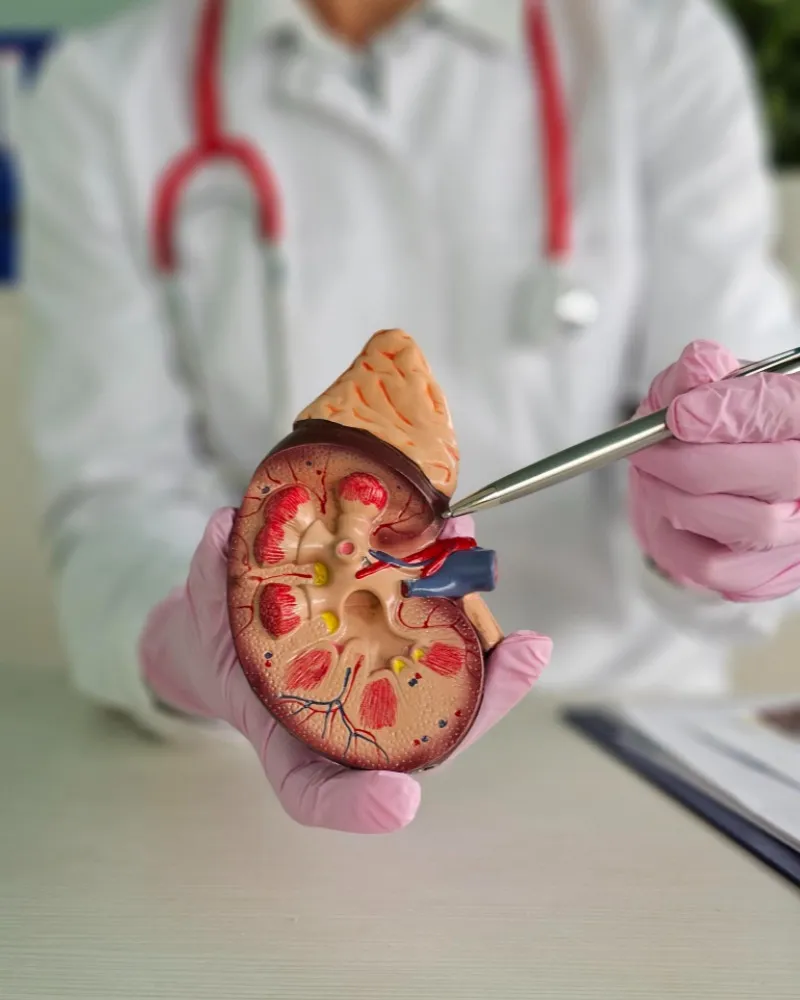
Retrograde intrarenal surgery, commonly called RIRS, is a minimally invasive procedure used to treat selected kidney stones. A flexible instrument is passed through the natural urinary passage to reach the kidney, where laser energy can break the stone into smaller fragments. There is usually no external incision.
At Jaipur AndroUrology Center, Dr Mahtab assesses whether RIRS kidney stone surgery is appropriate for patients in Pratap Nagar, Jaipur. The procedure is not automatically suitable for every stone, so provider selection should begin with accurate imaging and a clear explanation of alternative treatments.
When May RIRS Be Recommended?
RIRS may be considered for stones located inside the kidney or upper urinary tract. Its suitability depends on several factors, including:
- Stone size
- Number of stones
- Position within the kidney
- Stone density
- Urinary-tract anatomy
- Previous treatment results
- Presence of infection or obstruction
- Patient health and anaesthesia fitness
Some stones can be monitored, while others may be better treated with shock wave lithotripsy, ureteroscopy or PCNL. Larger or complex stones may require a different approach or more than one treatment session.
What Happens During the Procedure?
The surgeon introduces a flexible ureteroscope through the urethra and bladder before passing it into the ureter and kidney. Laser energy is then used to fragment or dust the stone. Selected fragments may be removed with a small retrieval device.
A ureteric stent may be placed to support urine drainage and allow swelling to settle. The stent is temporary and requires removal or replacement within the period advised by the doctor.
Anaesthesia is generally required. The duration of hospital observation depends on the procedure, medical condition and recovery from anaesthesia.
How to Evaluate an RIRS Provider
Equipment matters, but surgical judgement is equally important. An experienced provider should be able to explain why RIRS is preferable for the particular stone and what factors could change the treatment plan.
During the consultation, ask:
- What is the exact size, location and density of the stone?
- Is RIRS more suitable than PCNL or shock wave treatment?
- Is complete clearance likely in one session?
- Could access to the kidney be difficult?
- Will a stent be required?
- When and how will the stent be removed?
- What symptoms after surgery require urgent attention?
- Will stone analysis and prevention planning be provided?
A credible discussion should include limitations as well as expected benefits.
Benefits and Possible Risks
RIRS avoids a skin incision and can access areas within the kidney using a flexible scope. Recovery may be relatively quick in uncomplicated cases. Nevertheless, individual experiences vary.
Possible risks include:
- Urinary infection or fever
- Bleeding
- Ureteric injury
- Pain or urinary urgency from the stent
- Residual stone fragments
- Need for another procedure
- Rare narrowing of the ureter
Any untreated urinary infection generally requires attention before planned stone surgery. Patients should inform the doctor about fever, allergies, pregnancy possibility, previous procedures and blood-thinning medicines.
Readiness Before RIRS
Patients should carry recent imaging, urine culture results and earlier treatment records. They should understand the fasting instructions, medicine adjustments and arrangements for returning home after discharge.
Provider selection should not be based solely on claims such as painless, scarless or guaranteed stone clearance. Although RIRS has no external incision, temporary discomfort and incomplete clearance remain possible.
Patients looking for RIRS kidney stone surgery in Pratap Nagar can consult Jaipur AndroUrology Center for evaluation of the stone and urinary anatomy. A well-matched procedure, clear stent plan and organised follow-up are central to safe and effective stone care.
Keywords